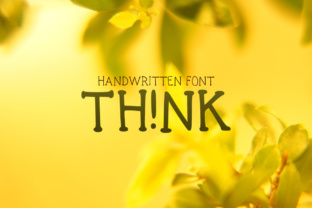
Think TH NK: A Framework for Clearer Thinking and Better Decisions
What Makes Think TH NK Different?
In a world flooded with information, the ability to think clearly has become a rare skill. Many frameworks promise sharper reasoning, but few are as adaptable and intuitive as Think TH NK. At its core, this approach strips away complexity and asks you to focus on four interconnected phases: Think, Thank, Navigate, and Know. The acronym itself is a reminder that true understanding requires both depth and gratitude — a willingness to explore ideas while staying grounded in what you already know.
Unlike rigid systems that prescribe a single formula, Think TH NK adapts to the user. A business owner facing a pricing dilemma uses it differently than a researcher evaluating data or a hobbyist learning a new craft. The power lies not in the letters themselves, but in the mental posture they cultivate. By intentionally moving through these four stages, you avoid the traps of confirmation bias, emotional overload, and shallow analysis.
Think: Generating Options Without Judgment
The first phase, Think, is about divergent thinking. Here you suspend criticism and let ideas flow. Professionals often skip this step, jumping straight to solutions. But Think TH NK insists that quantity precedes quality. Whether you are brainstorming marketing angles or troubleshooting a code bug, list every possibility — even the absurd ones. This phase is best done with pen and paper or a digital whiteboard, and it typically lasts a few minutes. The goal is to fill the canvas before you refine.
Real-world example: A product manager at a SaaS company used this phase to generate over 40 potential feature improvements. Among them was a simple toggle that later became the most requested update. Without the initial permission to list everything, that idea would never have surfaced.
Thank: Acknowledging Constraints and Context
After generating ideas, the Thank phase introduces gratitude — not as a vague sentiment, but as a strategic tool. You thank the constraints that limit you: budget, time, team size, or technical debt. These are not obstacles; they are guardrails that give shape to your thinking. In this phase, you list what you cannot change and accept it. This prevents wasted energy on unrealistic paths.
For a small business owner, this might mean thanking a limited marketing budget because it forces creative, low-cost tactics. For a researcher, it means thanking the narrow scope of a study because it makes findings actionable. Thanking shifts your mindset from frustration to focus, a key tenet of the Think TH NK method.
Navigate: Moving from Options to Decisions
The third phase, Navigate, is where judgment returns. You now have a list of possibilities and a clear picture of your boundaries. The task is to chart a course. Prioritize using criteria like impact, effort, alignment with values, and urgency. You might use a simple 2×2 matrix or a weighted scoring system, but the mechanism matters less than the deliberate act of choosing.
Observations from practice: Many people get stuck in the Navigate phase because they fear making the wrong choice. Think TH NK addresses this by treating decisions as experiments. You do not need the perfect path; you need the next best step. If it fails, you collect data and iterate. This reduces paralysis and increases action.
Know: Embedding Insights for Future Use
The final phase, Know, closes the loop. After implementing your decision, you reflect on what worked, what did not, and why. This creates a personal knowledge base that compounds over time. Without this phase, you repeat mistakes. With it, you build intuition. Think TH NK emphasizes writing down conclusions — even short notes — because memory is unreliable.
A software developer using this approach might log a specific bug fix and note the reasoning. Six months later, when a similar issue arises, they recall the pattern instantly. This transforms experience into expertise.
For Professionals and Business Owners
In fast-paced work environments, decisions are often reactive. Think TH NK provides a lightweight structure that can be applied in under ten minutes. A manager dealing with a team conflict can run through the phases quietly: Think (list all possible interventions), Thank (acknowledge the team’s history and constraints), Navigate (choose the approach with highest psychological safety), Know (schedule a follow-up to evaluate). This turns emotional situations into manageable processes.
Case in point: A retail franchise owner used the framework to decide whether to launch an online store. The Thank phase revealed that their biggest constraint was not budget but shipping logistics in remote areas. They navigated by choosing a hybrid model, and the Know phase later informed expansion into new regions. The tangible outcome was a 30% revenue increase without overextending resources.
For Educators and Researchers
Think TH NK aligns well with inquiry-based learning. Teachers can introduce it to students as a way to approach complex problems. Instead of memorizing facts, students learn to generate hypotheses (Think), acknowledge gaps in their knowledge (Thank), select research methods (Navigate), and document findings (Know). This fosters metacognition.
Researchers benefit from the structured reflection. A PhD student studying climate adaptation used the method to organize her literature review. The Know phase helped her identify biases in existing studies, leading to a stronger research question. She noted that the Thank phase was especially useful for accepting the limitations of her dataset, which saved months of fruitless analysis.
For Creators and Hobbyists
Creative work often involves overcoming blocks. Think TH NK addresses this by separating ideation from criticism. A writer struggling with a first draft can use the Think phase to vomit words without editing, then Thank the constraints (word count, genre conventions), Navigate toward a narrative structure, and Know what pacing techniques worked. The result is a more efficient creative process that still allows spontaneity.
Hobbyists learning a new skill, such as woodworking, find the framework helpful for troubleshooting. When a joint fails, they Think of possible causes, Thank the limitations of their tools, Navigate to a reinforcement technique, and Know to document it for future projects. This turns frustration into learning.
How Think TH NK Compares to Other Frameworks
Many thinking models exist — design thinking, first principles, OODA loop, six thinking hats. Think TH NK differs in its simplicity and its inclusion of gratitude as a functional step. While design thinking emphasizes empathy, it sometimes neglects the internal acknowledgment of constraints. The OODA loop (Observe, Orient, Decide, Act) is excellent for fast-paced situations but lacks the reflective close that builds compound knowledge. Think TH NK’s Know phase fills that gap.
Furthermore, the acronym itself is memorable and actionable. Users do not need a manual or a workshop. They can recall the four steps in seconds and apply them in the moment. This accessibility makes it suitable for both boardrooms and classrooms.
Implementation Tips for Getting Started
- Start small. Choose one daily decision — what to cook for dinner, which email to answer first — and run through Think TH NK mentally. This builds the habit without pressure.
- Use a physical anchor. A sticky note with the acronym on your monitor or notebook acts as a prompt. Over time, the process becomes automatic.
- Combine with journaling. The Know phase is most effective when written. Even a two-line entry creates a trail of insights you can review later.
- Adapt the time investment. For quick decisions, spend 30 seconds per phase. For major life or work choices, allocate ten minutes each. The framework scales.
- Share with a partner. Discussing your Thinking and Navigating steps with a colleague or friend can reveal blind spots. The Thank phase becomes more authentic when voiced aloud.
Common Pitfalls and How to Avoid Them
New users of Think TH NK sometimes rush through the Think phase, generating only three or four ideas. Counter this by setting a minimum of ten. Forced quantity often leads to unexpected gems. Another mistake is treating the Thank phase as mere positivity. It is not about being happy; it is about naming what you cannot change so you can work within it. Be specific: “Thank you, tight deadline, for forcing me to prioritize what truly matters.”
During Navigate, the risk is analysis paralysis. If you have more than three viable options, narrow them by eliminating the least aligned with your core values. If indecision persists, default to the option that provides the most learning — the Know phase will benefit regardless. Finally, do not skip the Know phase, even when busy. A single sentence of reflection takes thirty seconds and pays dividends later.
The Larger Vision Behind Think TH NK
Ultimately, Think TH NK is not just a problem-solving tool; it is a mindset that encourages curiosity, humility, and continuous improvement. In a culture that prizes speed and certainty, the framework invites you to slow down without losing momentum. It acknowledges that good thinking is both an art and a discipline, and that every decision — whether mundane or monumental — is an opportunity to learn.
By weaving gratitude into logic and reflection into action, Think TH NK offers a holistic approach that resonates across disciplines. Its beauty lies in its flexibility: you do not have to follow every step exactly; you can adapt the order or combine phases if needed. What matters is that you engage with each element intentionally, building a habit of mindful exploration.
As more people discover and share their experiences with Think TH NK, the framework continues to evolve. Whether you are a CEO mapping a five-year strategy or a parent planning a weekend trip, the same four phases can bring clarity to the chaos. Try it with your next thought — you might be surprised by the depth you uncover.