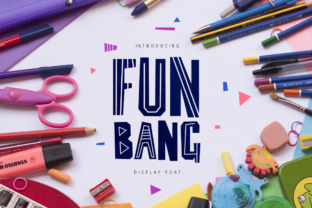
Exploring Fun Bang: A Dynamic Approach to Engagement and Creativity
In a world where workflows often feel rigid and outcomes predictable, the concept of Fun Bang emerges as a refreshing counterbalance. Rather than treating fun as a frivolous add-on, Fun Bang positions it as a core driver of energy, innovation, and meaningful results. This article unpacks what Fun Bang means, how it works across different contexts, and why it has captured the attention of professionals, creators, educators, and hobbyists alike. By understanding its characteristics and real-world relevance, you can decide how to integrate this approach into your own projects and processes.
What Defines Fun Bang?
At its simplest, Fun Bang refers to the deliberate integration of playful, enjoyable elements into activities that typically demand focus, effort, or repetition. But it goes beyond mere gamification or entertainment. The "bang" part of the name signals a tangible impact—a productive outcome that emerges from the fun itself. In other words, Fun Bang is about generating high-value results by making the process genuinely engaging.
Core Characteristics of Fun Bang
- Intrinsic motivation: Fun Bang taps into what naturally excites people—curiosity, challenge, social interaction, or creativity—rather than relying solely on external rewards.
- Low-barrier entry: The approach lowers the psychological cost of starting a task. Instead of facing a daunting blank page or complex procedure, participants begin with a playful prompt or collaborative activity.
- Iterative experimentation: Fun Bang encourages trial and error in a safe, low-stakes environment. Mistakes become learning moments, not failures.
- Shared experience: Even when used individually, Fun Bang often builds a sense of connection—through humor, shared discovery, or co-creation.
These characteristics make Fun Bang particularly suited for contexts where traditional top-down instructions or dry problem-solving methods have lost their effectiveness.
How Fun Bang Transforms Workflows and Creative Processes
The value of Fun Bang becomes evident when it is applied to real-world tasks. Consider a product development team facing a creative block during a brainstorming session. Instead of forcing ideas through structured prompts, the facilitator introduces a quick, game-like exercise where each person must sketch an absurd solution to the problem within thirty seconds. The room fills with laughter, and within minutes, someone’s offhand sketch sparks a genuinely innovative concept. That is Fun Bang in action: a moment of levity that yields a tangible breakthrough.
Similarly, in educational settings, a teacher might use Fun Bang to introduce a complex scientific principle. Rather than lecturing, they have students role-play as particles in a chemical reaction, moving around the classroom to demonstrate bonding and energy transfer. The students remember the concept because they experienced it physically and joyfully. The "bang" here is the improved retention and understanding.
For individual creators, Fun Bang can break the paralysis of perfectionism. A writer struggling with the first sentence of a blog post might spend five minutes free-writing the worst possible opening they can imagine. The result is often unexpected clarity—and an opening that actually works, after a few edits.
Advantages of Adopting the Fun Bang Approach
The benefits of Fun Bang extend beyond immediate mood improvement. Organizations and individuals who adopt this approach consistently report several advantages:
- Increased engagement: When a task feels like play, people voluntarily invest more time and mental energy without experiencing burnout.
- Higher creativity and problem-solving ability: Playful states activate the brain's default mode network, which is linked to divergent thinking and novel connections.
- Stronger team cohesion: Shared fun builds trust and reduces hierarchical barriers, making collaboration smoother.
- Better stress management: Fun Bang activities serve as micro-recoveries during intense work, preventing decision fatigue and improving resilience.
- Faster iteration cycles: In environments where experimentation is encouraged, teams produce more prototypes and refine them more quickly.
It is important to note that Fun Bang is not about avoiding hard work. Instead, it acknowledges that how we approach a task matters as much as the task itself. By shifting the emotional tone of the effort, the approach sustains momentum over longer periods.
Business Professionals and Team Leaders
In corporate settings, Fun Bang can revitalize meetings that have become stale. A weekly status update might be replaced with a "stand-up bingo" card where participants check off phrases like "synergy" or "let's circle back." Winner gets a trivial prize. The result is not only laughter but also heightened awareness of communication patterns. Similarly, product managers use Fun Bang to conduct customer journey mapping by having teams physically walk through a scenario, with each step acted out. These exercises produce insights that slide decks rarely uncover.
Educators and Researchers
Fun Bang aligns well with modern pedagogical theories like inquiry-based learning and gamification. A university lecturer in sociology might ask students to design a Twitter-style thread explaining a theoretical concept to a fictional celebrity. The constraint forces clarity and humor, and the resulting explanations are often more accurate than standard essays. Researchers, too, find value: brainstorming sessions for grant proposals become more productive when preceded by a short, unrelated creative challenge—like building the highest tower from sticky notes in two minutes.
Creatives and Hobbyists
For artists, designers, and makers, Fun Bang can unlock new directions. A graphic designer stuck on a logo might deliberately distort a vector shape using a random number generator, then work backward to make it intentional. A knitter might combine two completely different stitch patterns just to see what happens. The "bang" in these cases is a portfolio piece that would never have emerged from a linear process. Hobbyists especially appreciate that Fun Bang removes pressure—they can enjoy the process without worrying about the final output.
Consumers and End Users
Fun Bang also influences how products and services are designed. Apps that incorporate playful onboarding, for instance, often see higher user retention. A financial budgeting tool might include a "money personality quiz" with humorous results before diving into serious expense tracking. By starting with Fun Bang, the tool reduces anxiety around money management and builds user trust. Even customer service interactions can benefit: support agents who inject a lighthearted element into responses—when appropriate—tend to receive higher satisfaction ratings.
Observations from Early Adopters of Fun Bang Practices
Those who have deliberately integrated Fun Bang into their routines share consistent observations. First, resistance often appears early—some team members or participants worry that "playing" is unprofessional. This concern usually fades after the first successful session, when the tangible outputs outweigh any initial awkwardness. Second, Fun Bang works best when it feels authentic rather than forced. A scheduled "fun hour" that people dread defeats the purpose. Instead, the approach should feel spontaneous, even if it is planned behind the scenes.
Another observation is that Fun Bang scales poorly if it overemphasizes competition. While friendly rivalry can be motivating, the core should remain about collaboration and shared discovery. When a group feels that everyone can win—or that the goal is to explore rather than beat others—engagement deepens. Finally, early adopters note that the "bang" (the productive result) often comes from the most unexpected moments: a joke that unveils a flaw in logic, a silly drawing that sparks a new hypothesis, or a game that highlights a blind spot in a workflow.
Key Considerations When Using Fun Bang
Despite its advantages, Fun Bang is not a universal solution. It requires thoughtful implementation. Without clear connection to the actual goal, fun can become a distraction. The best applications maintain a thread between the playful activity and the serious objective. For instance, a team that uses improv games should follow up with a reflection on how the game principles apply to their project.
- Align with context: Fun Bang should adapt to the culture and maturity of the group. A research lab may need more structure than a creative agency.
- Respect boundaries: Some people prefer quiet concentration over group play. Offer opt-in participation or solo variations.
- Measure impact: While fun itself is valuable, track whether it leads to better outcomes—faster problem-solving, higher retention, or more innovative ideas.
- Balance with discipline: Fun Bang is a complement, not a replacement, for rigorous processes. Use it as a catalyst, not a crutch.
For businesses and educators, it is also worth considering how Fun Bang interacts with existing performance metrics. If the culture heavily penalizes failure, the playful experimentation essential to Fun Bang will be stifled. Leaders who wish to adopt this approach must signal that exploration is valued alongside execution.
Future Directions and Emerging Trends
As remote and hybrid work become standard, Fun Bang offers new ways to maintain human connection. Virtual whiteboard games, asynchronous challenges (like "post the most creative desk setup photo"), and AI-generated prompts are already being used to inject fun into distributed teams. Meanwhile, the rise of design thinking and agile methodologies has created fertile ground for Fun Bang, since both emphasize iteration and empathy.
In education, the trend toward project-based and student-led learning aligns naturally with Fun Bang principles. Teachers are designing escape-room-style reviews of course material, in which solving a puzzle requires applying multiple concepts. Such activities are not only memorable but also assess deeper understanding than multiple-choice tests.
For individual creators and hobbyists, the availability of cheap digital tools (collaborative boards, random prompt generators, simulation games) makes it easier than ever to self-impose Fun Bang constraints. A photographer might use a random word generator to choose a theme for the week; a writer might commit to writing a paragraph in the style of a specific advertisement. The key is embracing the process as an end in itself, while remaining open to the unexpected outcomes that give Fun Bang its name.
Ultimately, Fun Bang represents a shift in mindset: from seeing fun as a break from productivity to seeing it as a channel for productivity. When used with intention, it can turn everyday tasks into discoveries, meetings into workshops, and learning into adventure. Whether you are a business leader looking to energize your team, an educator seeking deeper engagement, or a hobbyist wanting to shake off creative rust, Fun Bang provides a framework worth exploring. The best way to understand it is to try it—starting with a small, playful experiment today.